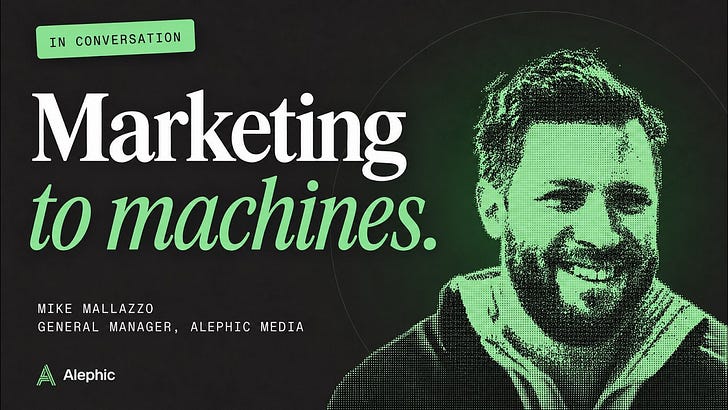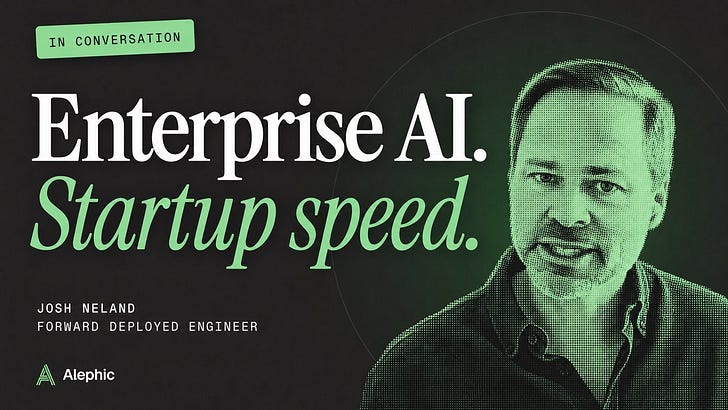

What has to change inside a company before AI changes its productivity? In Metal to Market Episode 6, Noah Brier and James Gross recap BRXND and discuss how teams learn to work differently. The conversation moves from factory electrification and marketing’s role in adoption to model economics, portable company knowledge, and checking the work agents produce.
Four takeaways
Redesign the work. Noah uses factory electrification to explain why a new technology can take years to change an organization. His argument is that the larger gains come as companies rethink how work is arranged.
Give people a reason to adopt. James argues that marketers have a role in changing behavior inside companies and building public understanding of AI. His Hilton hackathon example starts with people solving problems that already frustrate them.
Evaluate models against the work and the workload. The group weighs capable planning models, cheaper models for delegated tasks, and the economics of running models on rented GPUs. Noah stresses that utilization and output quality matter when comparing costs.
Keep company knowledge portable and check the output. Noah argues for company context that can work across providers, drawing on messages, documents, meetings, and agent sessions. The discussion also raises access, privacy, and the need to review work based on potentially stale memory.
In this conversation
00:00 BRXND takeaways
The episode opens with a recap of BRXND and the ideas Noah and James took away from the event.
00:40 What electricity teaches us about AI
Noah traces the shift from steam-powered factories to individually powered machines. He uses it to explain his view that AI adoption and organizational change could take another 10 to 20 years.
04:40 How Alephic rolled out AI slides
Noah describes encouraging use of Alephic’s slide system through shared agent instructions, then considers why people at different stages of AI adoption can talk past each other.
07:04 Where big companies are on AI
Large companies have existing systems, investments, and people to retrain. Noah argues that their scale changes the economics and pace of adopting a new way of working.
14:33 Why marketing should drive AI adoption
James argues that marketers should help shape AI adoption and public understanding. He connects the discussion to earlier changes in mobile and social media, and to the story around autonomous vehicles.
22:16 What worked in Hilton’s AI hackathon
James recounts Hilton’s experience with a hackathon in which useful projects began with employees tackling frustrations in their own jobs.
23:41 Anthropic and the economics of AI
The speakers discuss Anthropic’s IPO story and enterprise demand, then contrast their long-term expectations with the market sell-off described in the episode.
25:47 When cheaper models make sense
Noah describes using a capable model to plan and coordinate work while delegating suitable tasks to cheaper models. He sees room for substantial demand across different price points.
29:19 Revolut and running your own models
A reported move by Revolut to run open models prompts a discussion about whether lower inference costs justify switching providers or infrastructure.
30:32 What companies spend on AI
Noah distinguishes paying for tokens on demand from renting GPU capacity continuously. He argues that a cost comparison needs to account for utilization, available alternatives, and model quality.
34:07 Keeping company context portable
Noah argues that companies should keep their knowledge accessible across model providers so they can change tools as capabilities and costs evolve.
35:08 The open-model race
James sees room for both frontier providers and open models. The discussion considers competition, compute supply, and why the speakers resist treating the market as a single-winner contest.
40:36 How Claude remembers between sessions
The group discusses Anthropic’s approach to agent memory. Noah asks how much explicit memory infrastructure models will need as they become better at finding useful information in earlier sessions.
43:45 The knowledge companies already capture
Noah points to messages, documents, emails, and meeting records as existing organizational memory. He also raises the questions of privacy, access, and how to incorporate agent-session history.
47:50 Checking AI-generated work
The closing advice is to read, check, and understand AI-generated work before sharing it, especially when its memory may be stale or incomplete.
49:12 Where to watch the BRXND talks
The episode closes with directions to the BRXND talks and an invitation to suggest questions for future conversations.